Why the Best Journaling Notebooks from LeStallion Actually Inspire Productivity
I have spent years trying to find a notebook that does not just sit on a shelf collecting dust. The problem is not a lack of ambition. Most of us start with good intentions, buying a beautiful journal and a nice pen, promising ourselves we will write every morning. Then life gets in the way. The notebook becomes a place for shopping lists and random thoughts, or worse, it stays blank because the pages feel too precious to mess up.
What I have learned is that the notebook itself matters far more than most people admit. A flimsy cover, paper that bleeds through, a binding that cracks after a month - these small frustrations add up until writing feels like a chore rather than a release. That is why I started looking closely at what makes a journal genuinely useful, not just beautiful. And that search led me to a surprising conclusion: the best journaling notebooks from LeStallion are built for actual daily use, not just for looking good on a desk.
What Makes a Notebook Productive
Productivity is a loaded word. For some people it means bullet lists and task tracking. For others it means long reflective writing or sketching ideas. A truly productive notebook adapts to however you think, without getting in the way.
Paper quality is the first thing I check. If the ink bleeds through to the next page, I stop writing. It breaks my flow and I start worrying about making a mess. LeStallion uses thick, fountain-pen-friendly paper that handles most inks without ghosting. That might sound like a luxury, but it is actually a practical choice. When you do not have to worry about the paper, you write more freely and for longer.
Binding is another detail that matters more than you would think. A lay-flat binding means you can open the notebook completely without fighting the spine. That matters when you are taking notes in a meeting or writing in a cramped coffee shop. The pages stay open, and your hand does not tire from holding the notebook down.
Size and Portability
I have owned notebooks that were too big to carry and too small to write in. The sweet spot is something that fits in a bag but still gives you enough space for a solid page of thoughts. LeStallion offers several sizes, but their A5 and B5 options are the ones I keep coming back to. The A5 is great for daily carry and quick notes. The B5 gives you room for longer entries without being as bulky as a full letter-size pad.
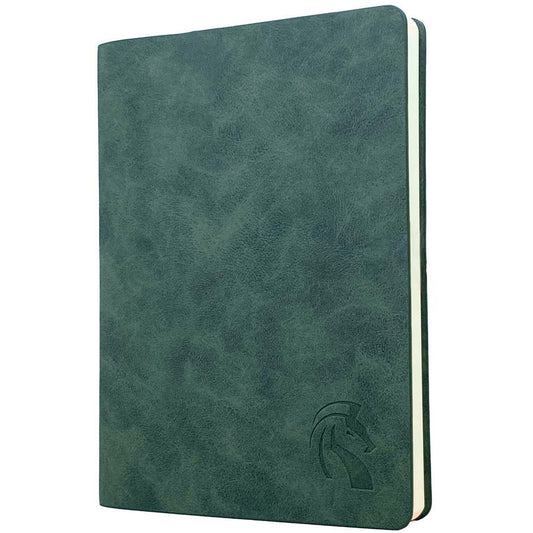
Portability matters because the best journal is the one you have with you when inspiration strikes. If the notebook stays home because it is too heavy or awkward, it is not serving its purpose. The covers on these notebooks are sturdy but flexible, so they hold up to being tossed in a bag without getting bent or damaged.
How a Notebook Can Inspire Consistency
Consistency is the real secret to any journaling practice. Writing once a week is better than not writing at all, but writing a little every day builds momentum. The notebook itself can encourage that habit if it is designed well.
One feature I appreciate is the built-in bookmark ribbon. It sounds small, but it saves me from losing my place or grabbing random pages. I open the notebook, flip to the ribbon, and start writing. No fuss, no hesitation. The less friction between you and the page, the more likely you are to write.
Another detail is the page layout. Some people prefer blank pages for drawing or mind maps. Others like ruled lines for neat handwriting or dot grid for more structured notes. LeStallion offers multiple options, so you can pick what fits your style. I use dot grid because it gives me structure without being as rigid as ruled lines. I can sketch diagrams, write in columns, or just fill the page with text.
The best journaling notebooks from LeStallion also include numbered pages and a table of contents section at the front. That might sound like a small thing, but it transforms the notebook into a searchable archive. You can flip back to a specific idea without hunting through hundreds of unmarked pages. Over time, that makes the notebook more valuable as a reference tool, not just a daily log.
Real-World Testing: A Month with the Notebook
I used one of these notebooks for a full month to see if it actually made a difference. I wrote every morning for about fifteen minutes, sometimes about my goals for the day, sometimes about random ideas or frustrations. I also used it for meeting notes and project planning.
What surprised me was how quickly the notebook became my default thinking tool. I stopped reaching for my phone or a random scrap of paper. The notebook was always on my desk or in my bag, and opening it felt natural. The paper held up well to a fountain pen and a fine-tip rollerball without any bleed-through. The cover showed a little wear after a few weeks, but it looked better with use, not worse.
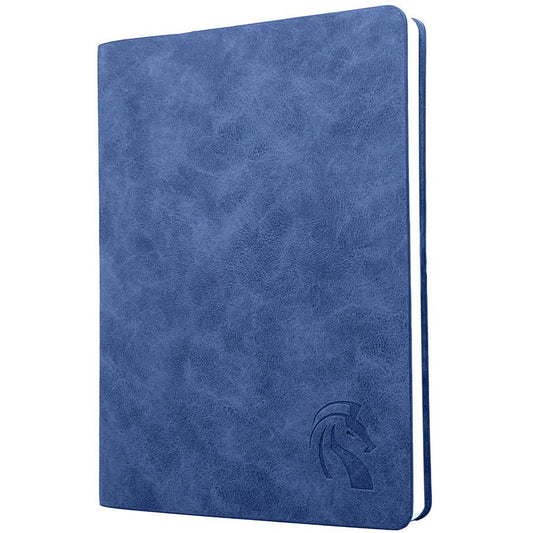
I also tested it under less ideal conditions. I took it on a train, wrote in a park on a windy day, and even dropped it once. The binding stayed intact, and the pages did not come loose. That kind of durability is rare in a notebook that still feels premium and not like a rugged field journal.
Trade-Offs to Consider
No notebook is perfect for everyone. The paper is thick enough for most pens, but if you use a very wet fountain pen with heavy ink flow, you might see a little show-through on the reverse side. It is not bleed-through, but it is visible. That is a trade-off for having paper that is not so thick that the notebook becomes bulky.
The price is higher than a basic composition notebook. But you are paying for materials and construction that last. A cheap notebook that falls apart or bleeds ink is not a bargain if it stops you from writing. I have gone through dozens of cheaper notebooks over the years, and I spent more in total than I would have on one quality journal that I actually used consistently.
Another thing to keep in mind is that these notebooks are not designed for extreme portability in a pocket. They are meant for a desk, a bag, or a shelf. If you need something that fits in a shirt pocket, look at their smaller options. But for daily carry in a backpack or tote, the A5 size is perfect.
How to Get the Most Out of Your Notebook
A good notebook is just a tool. What matters is how you use it. Here are a few practices that helped me stay consistent:
- Write at the same time every day. Morning works best for me because my mind is clear and I have not been distracted by the day yet.
- Do not worry about writing perfectly. The notebook is for you, not for an audience. Messy pages are better than blank ones.
- Use the first few pages to index what you write. That way you can find ideas later without flipping through everything.
- Keep a pen clipped to the cover. If you have to search for a pen, you are less likely to write.
These habits matter more than the notebook itself. But the right notebook makes them easier to stick with. When the paper feels good and the binding does not fight you, writing becomes something you look forward to rather than a chore.
Why This Notebook Stands Out
There are plenty of notebooks on the market, from budget options to luxury brands. What sets LeStallion apart is that they clearly thought about how people actually use a journal, not just how it looks on a shelf. The details - the bookmark, the numbered pages, the lay-flat binding, the paper that handles multiple ink types - all point to a product designed for real writing sessions.
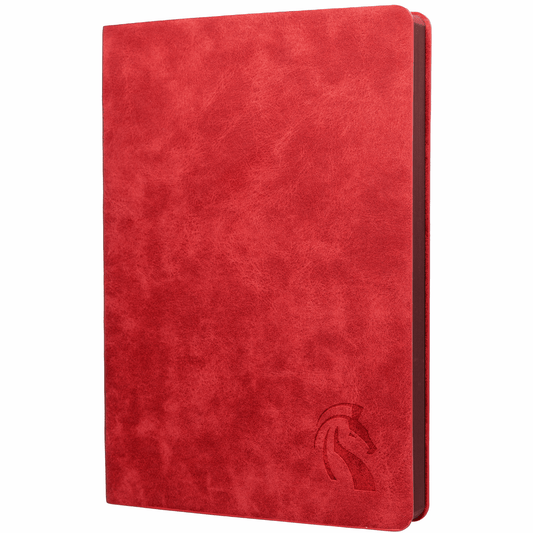
I have recommended these notebooks to friends who were new to journaling and to experienced writers who wanted a reliable daily driver. The feedback has been consistent: people write more often and with less frustration. That is the whole point.
If you are looking for a notebook that will actually support a productive writing habit, I would suggest starting with an A5 dot grid version. It is versatile enough for almost any use case, and the quality gives you room to grow into the practice without outgrowing the notebook.
The best journaling notebooks from LeStallion are not just about paper and binding. They are about removing the small barriers that keep you from writing. When those barriers are gone, what is left is the pure act of putting your thoughts on paper. And that act, done regularly, is one of the most productive things you can do for your mind and your work.
Corrections
Spot something wrong? Send it to the desk and it gets fixed in the open.